
Hinkley C investment decision: A new dawn for UK nuclear power?
Wednesday July 27, 2016
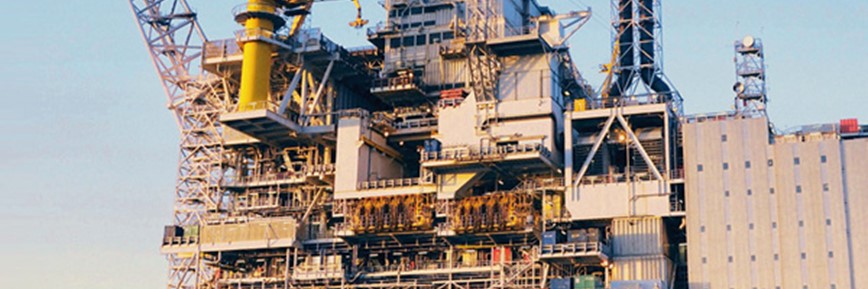
The long-awaited final investment Decision (FID) for EDF Energy’s planned 3,200-MW Hinkley Point C nuclear power station in western England, scheduled to take place at a board meeting of French utility EDF in Paris July 28, will not only give the go ahead for the first new nuclear plant in the UK since 1995, but could also serve as the starting gun for a total of 16,000 MW of new nuclear capacity due to be built in the country.
Key to Hinkley’s significance for other new nuclear construction, not only in the UK but elsewhere in the European Union, is the Contract for Difference, or CFD, a 35-year offtake price guarantee and debt protection.
Hinkley’s strike price was agreed at £92.50/MWh, or £89.50/MWh, if a positive FID is taken on further EPR units at Sizewell C. EDF estimates that it will make a rate of return on the project of around 9% over a 60-year lifetime.
The CFD mechanism was approved as legal state aid by the European Commission after an in-depth investigation, although it is still the subject of a legal appeal by Austria to the European Court of Justice, or ECJ.
NuGeneration Limited, or NuGen, a consortium that is 60% owned by Japan’s Toshiba and 40% owned by France’s Engie, and Horizon Nuclear Power Limited, a subsidiary of Japan’s Hitachi, have both said that all of their new nuclear construction plans will be funded by a similar CFD model.
NuGen plans to build 3,800 MW of new nuclear capacity at its Moorside facility adjacent to the existing Sellafield fuel reprocessing and nuclear decommissioning complex in Cumbria in north England.
Horizon plans to build a two reactor, 2,700 MW plant at Wylfa Newydd, or New Wylfa, on the Isle of Angelsey in north Wales and another 2,700 MW, two reactor plant at Oldbury in Gloucestershire in western England.
Further afield, Lithuania and the Czech Republic have both indicated that they could use a similar CFD funding mechanism if they proceed with new nuclear construction, although Poland appears to have cooled on the funding model, under a new, coal industry-friendly government.
Historical ambitions
All this should be taken with a pinch of salt, however. The UK has a history of ambitious new nuclear construction programs that end up as something of a damp squib.
The last n...